
Industry · Healthcare and nursing homes
Robots for healthcare and nursing homes, more time for care.
Meal and linen transport, corridor upkeep, room hygiene: robots take on the logistics so staff can devote themselves to residents and patients.
Use case exampleUVD Robot— UV-C disinfection
Featured robots
The models we recommend most often
An indicative selection: the final model is always chosen after your site assessment.
- Availablephoto 1:1
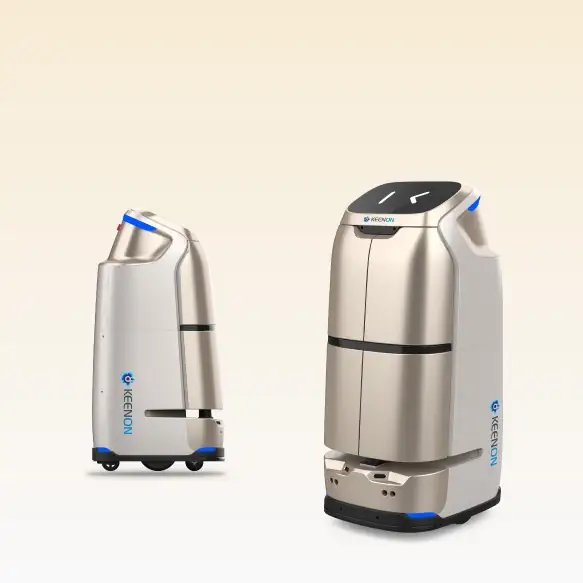
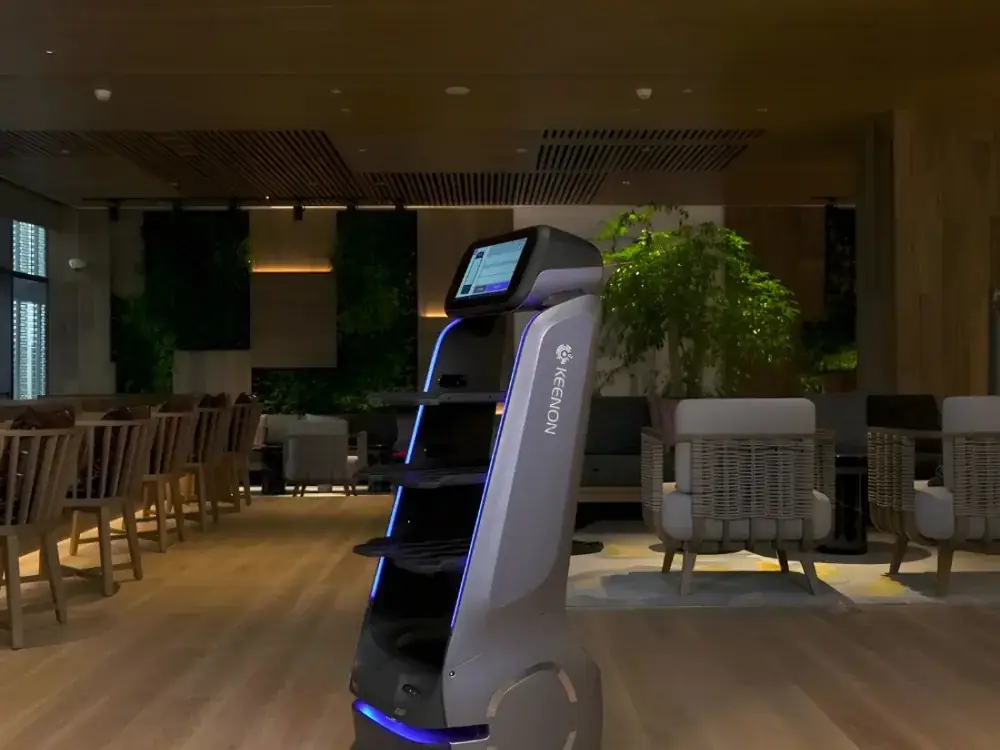
Keenon · Medical transport
Keenon BUTLERBOT W3
- Medication, meals, samples and linen
- Moves between floors unassisted
- Compartments locked until delivery
Main benefit: Spares caregivers the trips to the pharmacy and the kitchen.
- Availablephoto 1:1
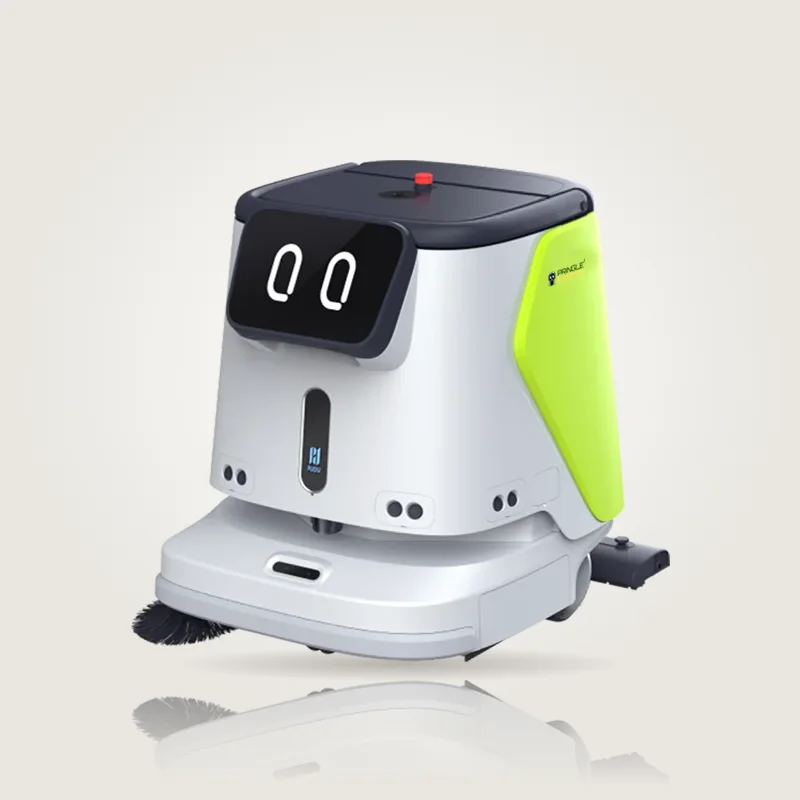
Pudu · 4-in-1 cleaning
Pudu CC1
- Sweeping, scrubbing, vacuuming and mopping
- Hard floors and carpets (optional module)
Main benefit: Maintains a consistent level of hygiene along circulation areas.
- Availablephoto 1:1
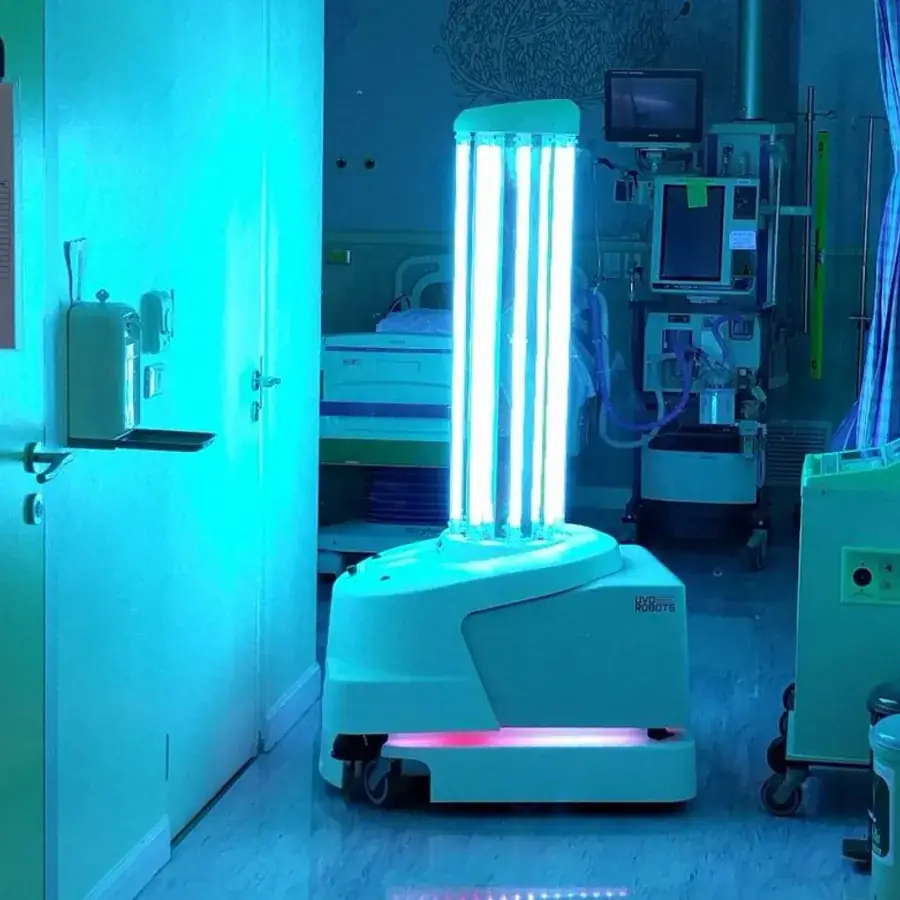
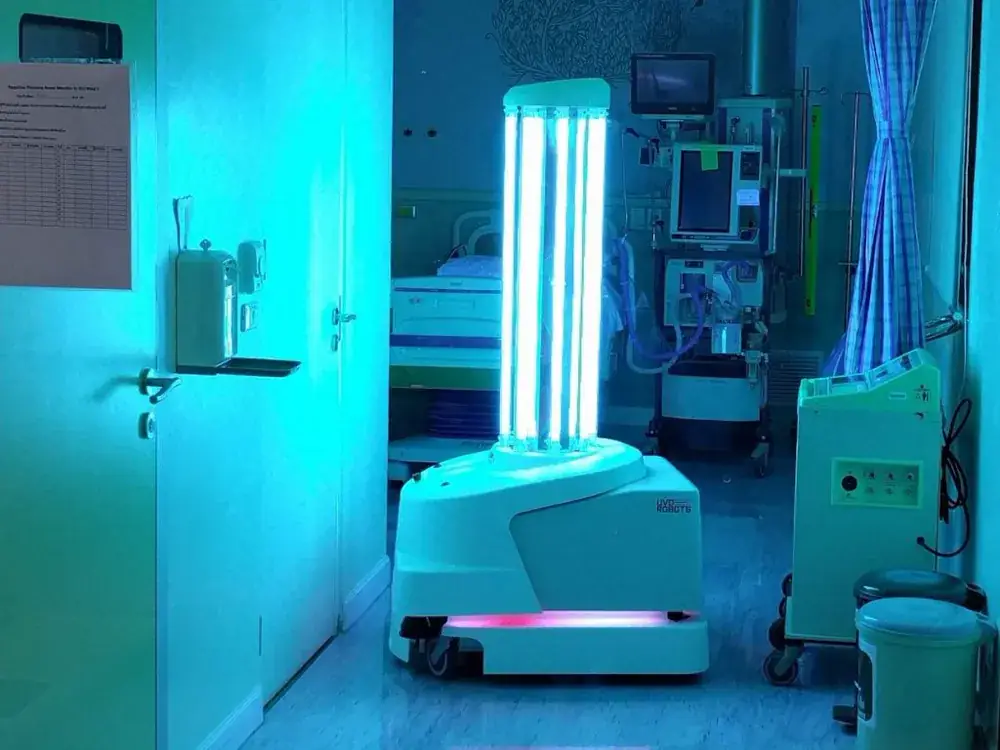
UVD Robots · Hygiene
UVD Robots UVD Robot
- Eliminates up to 99% of pathogens
- 15 to 20 minutes per room
- Works at night, in unoccupied rooms
Main benefit: Strengthens hygiene protocols without calling on staff.
In practice
Robots in a healthcare facility
Where robots work, and which ones: each number links to the suitable models.
Reception
Greet visitors and families and, depending on the model, lead them to a room, an elevator or a department.
See reception robotsDisinfection
Disinfect an unoccupied room with UV-C light, at night for instance.
In brief
Service robotics for healthcare and nursing homes
In healthcare facilities, service robots handle internal logistics and hygiene: transporting meals, linen and medication between floors, cleaning floors and UV-C disinfection. The goal is to cut the non-care trips made by staff. Transport and disinfection robots also work at night, without tying up a team.
Definitions
- UV-C disinfection
- A process that uses type C ultraviolet light to inactivate viruses and bacteria on the surfaces of an unoccupied room.
- Service robot
- A robot designed to assist staff with operational tasks (carrying, cleaning, welcoming), as opposed to the fixed industrial robots found on production lines.
- Robot-as-a-Service (RaaS)
- Renting a robot for a monthly or quarterly fee with a 36-month commitment, including installation, maintenance, insurance and replacement in case of failure. It is the alternative to buying the robot outright.
How it works
How a robot eases a facility's logistics
The robot handles trips between technical services and care units, on scheduled rounds or on demand.
Mapping
The robot maps the floors, elevators and restricted-access areas.
Scheduling
Rounds (meals, linen, pharmacy) are defined with the nursing managers.
Transport
The robot delivers to the right unit and notifies staff when it arrives.
Traceability
Every delivery is time-stamped and can be checked in the dashboard.
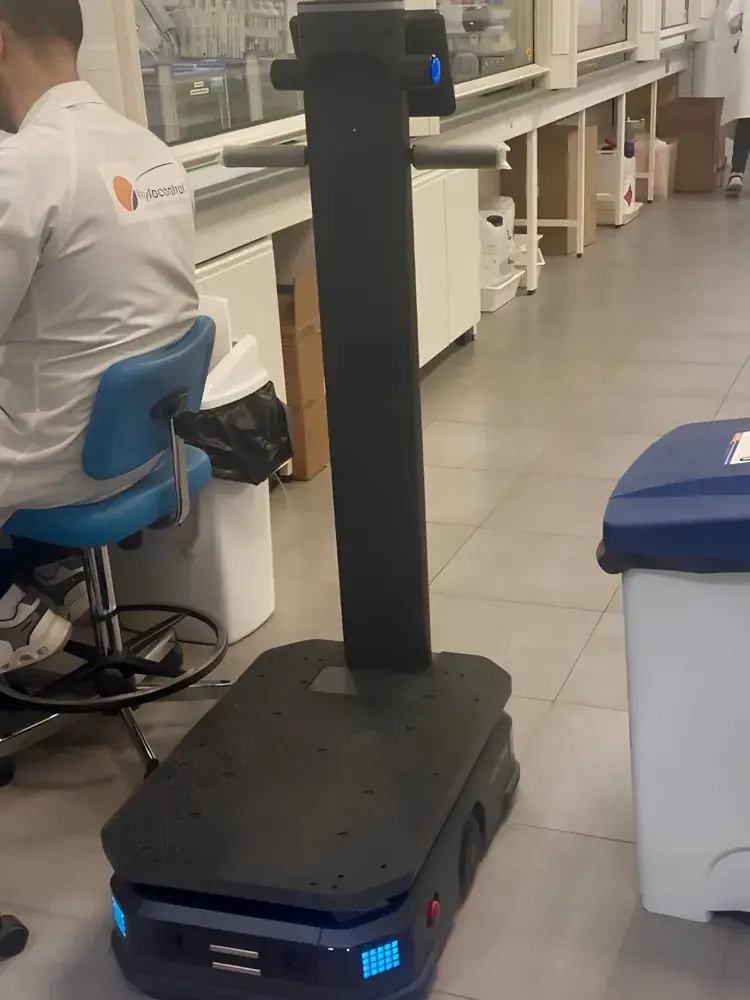
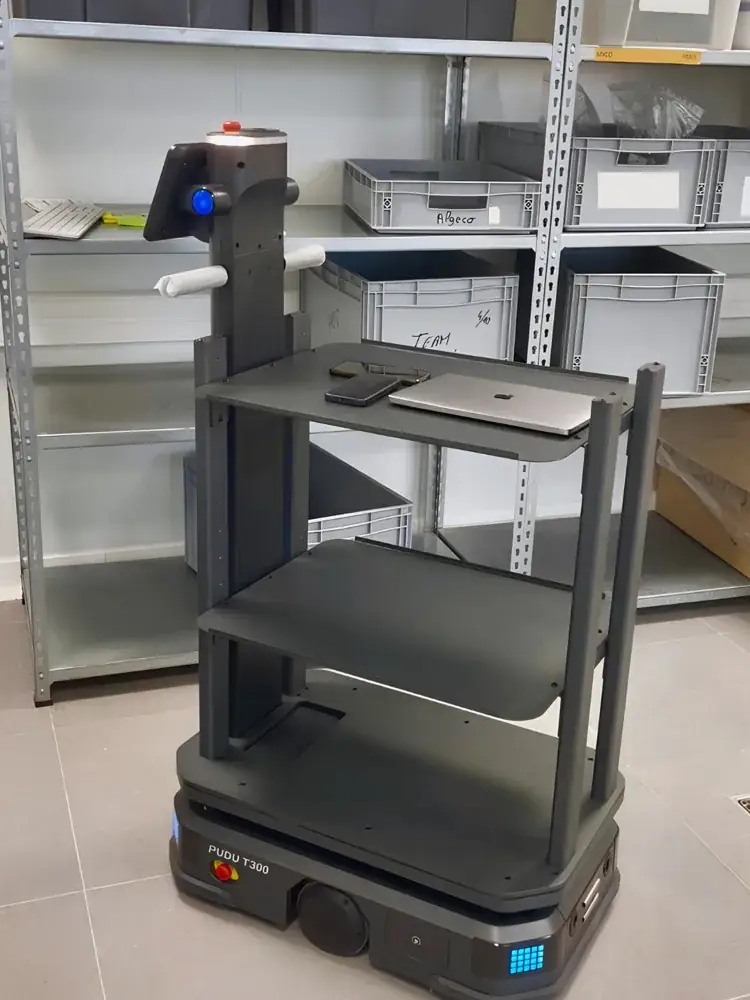
Robot types
The robot families used in healthcare and nursing homes
Each family addresses a specific task. Many facilities combine two or three of them.
- photo 4:3
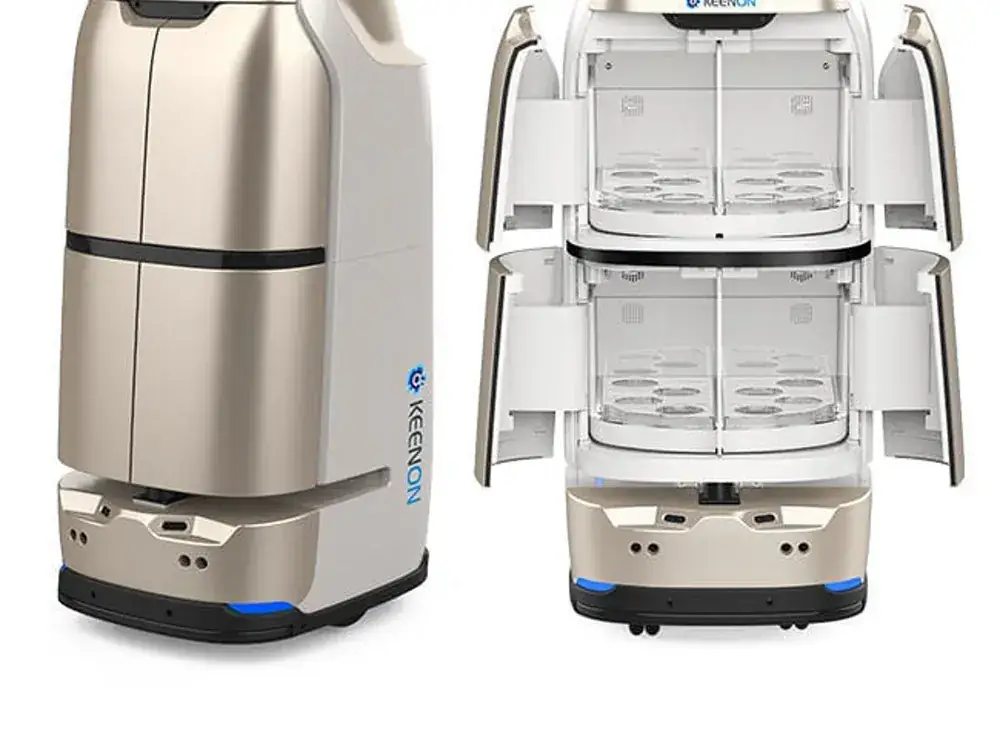
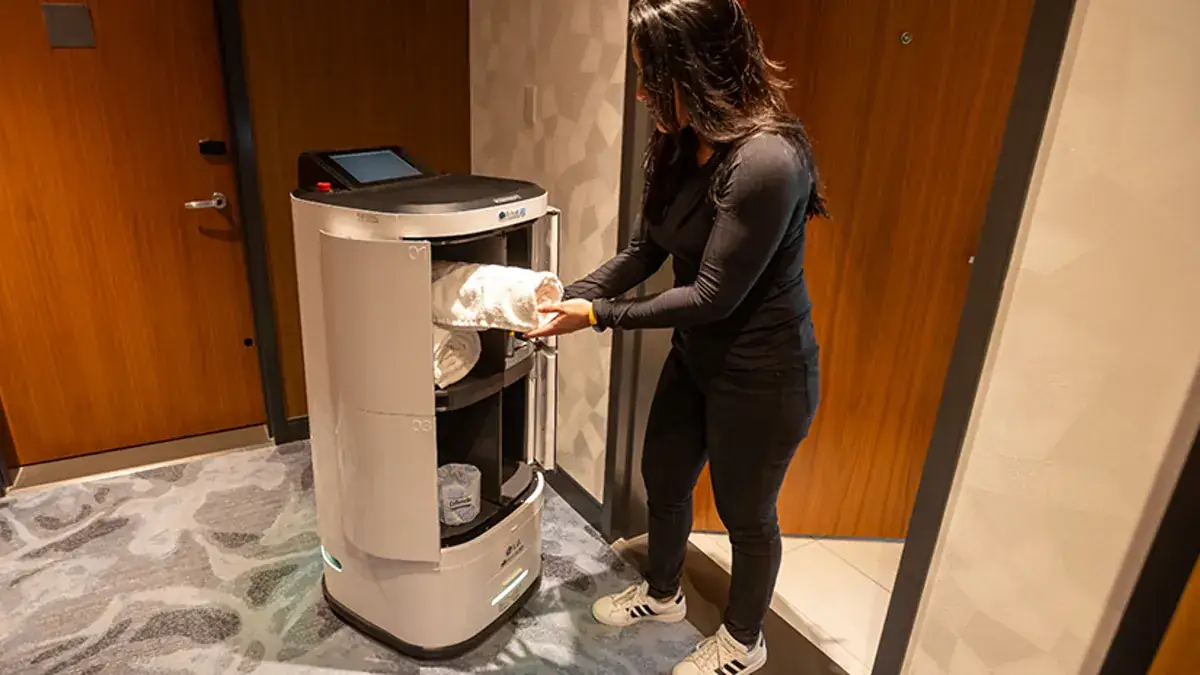
Transport robots
Meals, linen, medication and samples between floors.
Keenon BUTLERBOT W3 · PuduBot 2
See these robots - photo 4:3
- photo 4:3
- photo 4:3
UV-C disinfection robots
Disinfecting unoccupied rooms and operating theaters at night, with no staff required.
UVD Robot
Which robot for your facility?
One week of assessment to shortlist suitable robots, then a free demonstration at your site with test robots.
Use cases
Real situations, measurable results
Meal distribution
Situation
At mealtimes, care assistants make trip after trip to and from the kitchen.
With a robot
The robot brings the carts, and staff stay with the residents.
Night-time deliveries
Situation
At night, the reduced team cannot leave the unit to go to the pharmacy.
With a robot
The robot handles the transport, and continuity of care is preserved.
Corridor upkeep
Situation
Corridors see heavy traffic and need regular cleaning.
With a robot
The robot cleans the floors on a fixed schedule that is logged and verifiable.
ROI and benefits
Key figures for the industry
Every figure is sourced. Estimates are flagged and refined during the assessment with your actual data.
- annual cost of hospital-acquired infections for French hospitals
- €7bn
- Market data
- of pathogens eliminated by a UV-C disinfection robot
- 99%
- Manufacturer data
- availability for transport rounds
- 24/7
- Manufacturer specifications
- hardware response time for Elio after-sales service in France
- 48 h
- Elio commitment
Our advisory approach
We assess your needs before recommending a robot.
In healthcare and nursing homes as elsewhere, the right robot depends on your flows, your spaces and your systems. Elio acts as an independent integrator: every recommendation stems from an on-site assessment, not from a catalog.
Discover our full method- 1 week
Assessment and shortlist
Understanding your needs, detailed on-site analysis and a robot shortlist drawn from several manufacturers.
- With you
Robot selection
Joint decision on the robot or robots to retain, and choice between purchase and a 36-month rental with monthly or quarterly fees.
- On site
Free demonstration
Free demonstration at your site, with test robots, in your real-world conditions.
- Ongoing
Maintenance and after-sales
Preventive and corrective maintenance, hardware response within 48 h in France, replacement if needed.
Multi-brand
The best manufacturers, a single point of contact.
Elio partners with the world's leading robot manufacturers. You get access to the whole market's offering, with a single contract, a single after-sales service and a single dashboard.
Independent advice
No brand is imposed: the recommendation starts from your needs, not from stock to clear.
The right robot for each task
A different model can be chosen for transport and for cleaning, on the same site.
No vendor lock-in
You are not tied to a single manufacturer's roadmap or pricing.
Better value for money
Models are compared on the same technical and financial criteria before any choice is made.







Frequently asked questions
Your questions about robots for healthcare and nursing homes
Another question? Write to us.
No. The robot takes over logistics tasks (transport, cleaning) that are not part of care. It gives staff time back to support residents and patients.
Transport robots have closed compartments. The locking method and access control are checked model by model during the selection phase, together with the facility's pharmacy.
Yes. UV-C robots eliminate up to 99% of pathogens in 15 to 20 minutes per room, at night and with no staff required. They complement the transport and cleaning robots that are already available.
There are two options: buying the robot, or renting it for a monthly or quarterly fee with a 36-month commitment, including installation, maintenance, insurance and replacement in case of failure. The option is chosen according to your purchasing constraints, especially for public facilities. Investment grants may be available depending on the region.
Allow one week to analyze your needs in detail and shortlist suitable robots. We then choose the robot or robots together, and organize a free demonstration at your site with test robots. Maintenance and after-sales service take over from there.
Related industries
You may also be interested in

Let's talk about your project for healthcare and nursing homes.
A 15-minute call with an Elio engineer to qualify your needs. No commitment.