

Industry · Logistics and warehouses
AMR robots for logistics, integrated with your WMS.
Autonomous mobile robots move loads and keep your site's floors clean. Elio connects them to your WMS and ERP so they fit into your real-world flows.
Use case examplePudu MT1 Vac— Warehouse cleaning
Featured robots
The models we recommend most often
An indicative selection: the final model is always chosen after your site assessment.
- Availablephoto 1:1
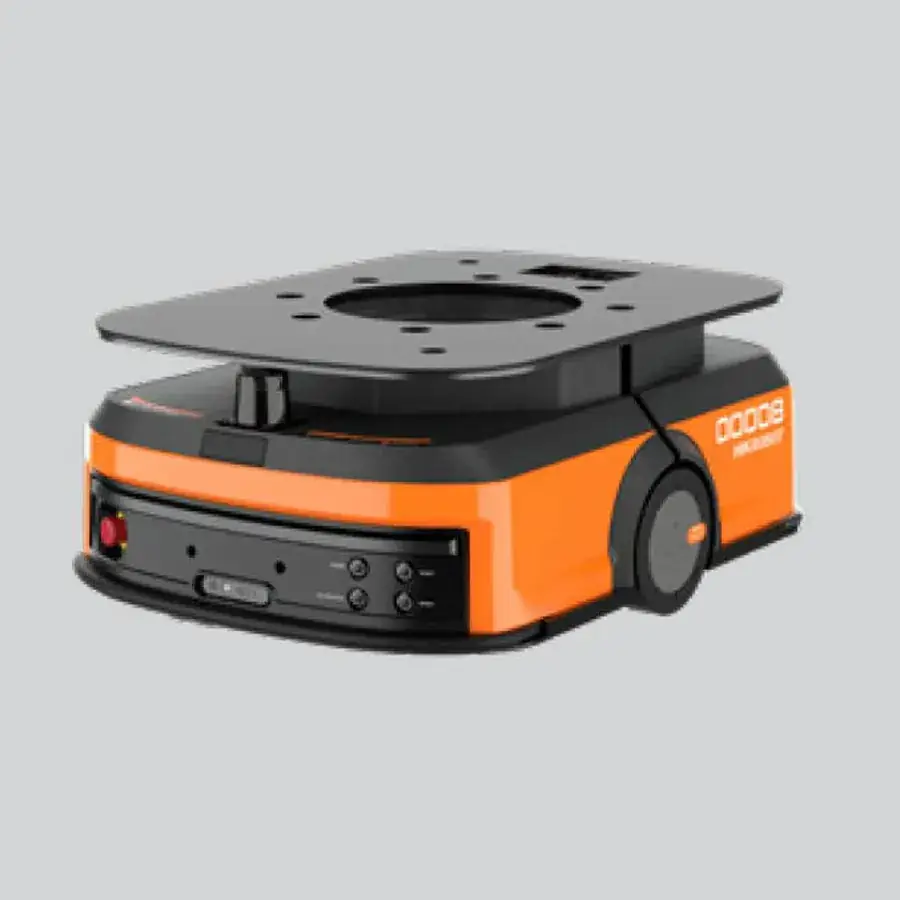
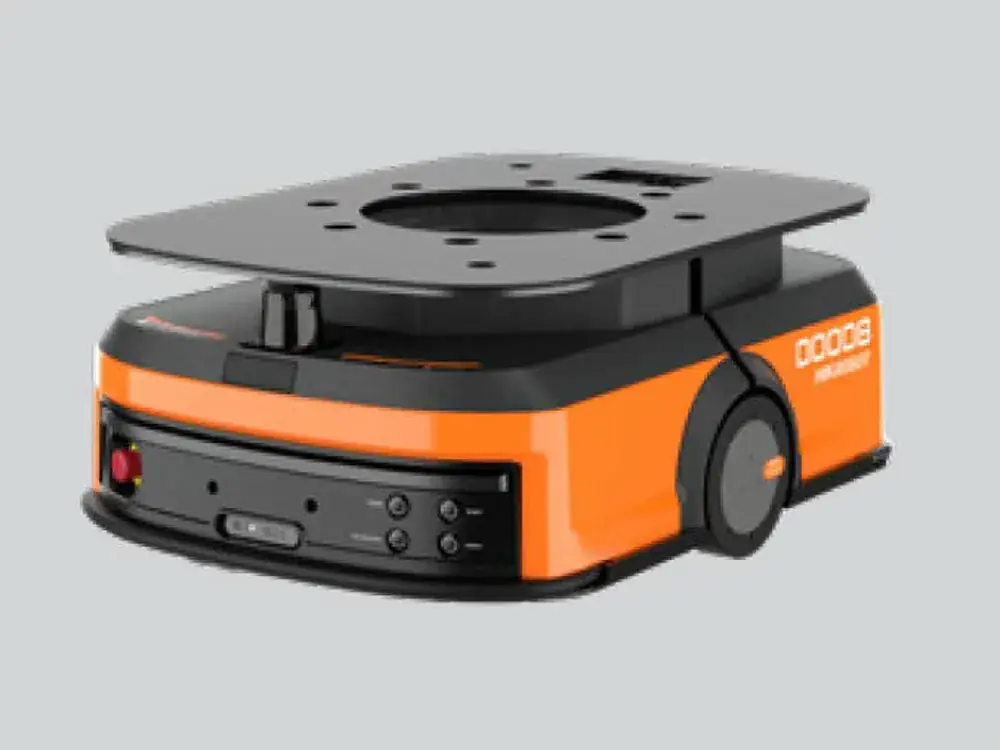
HikRobot · Autonomous mobile robot
HikRobot AMR
- Up to 600 kg payload
- Natural SLAM navigation
- Built-in fleet management
Main benefit: Automates pallet flows without changing the site's infrastructure.
- Availablephoto 1:1
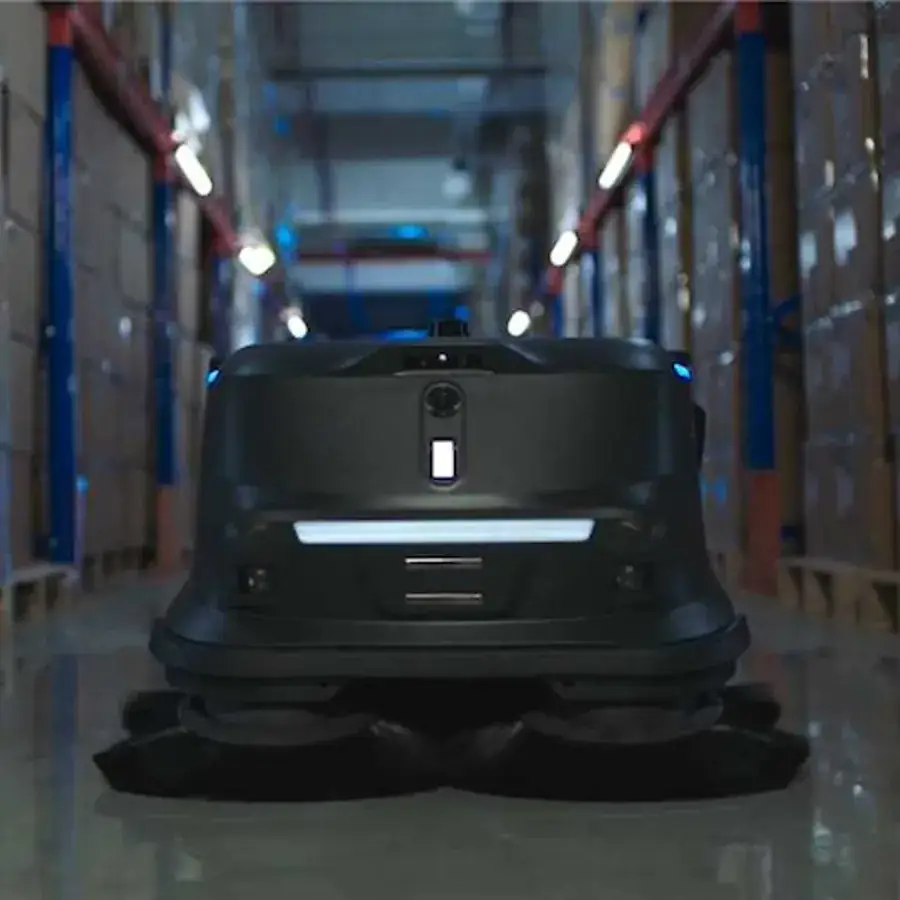
Pudu · Industrial cleaning
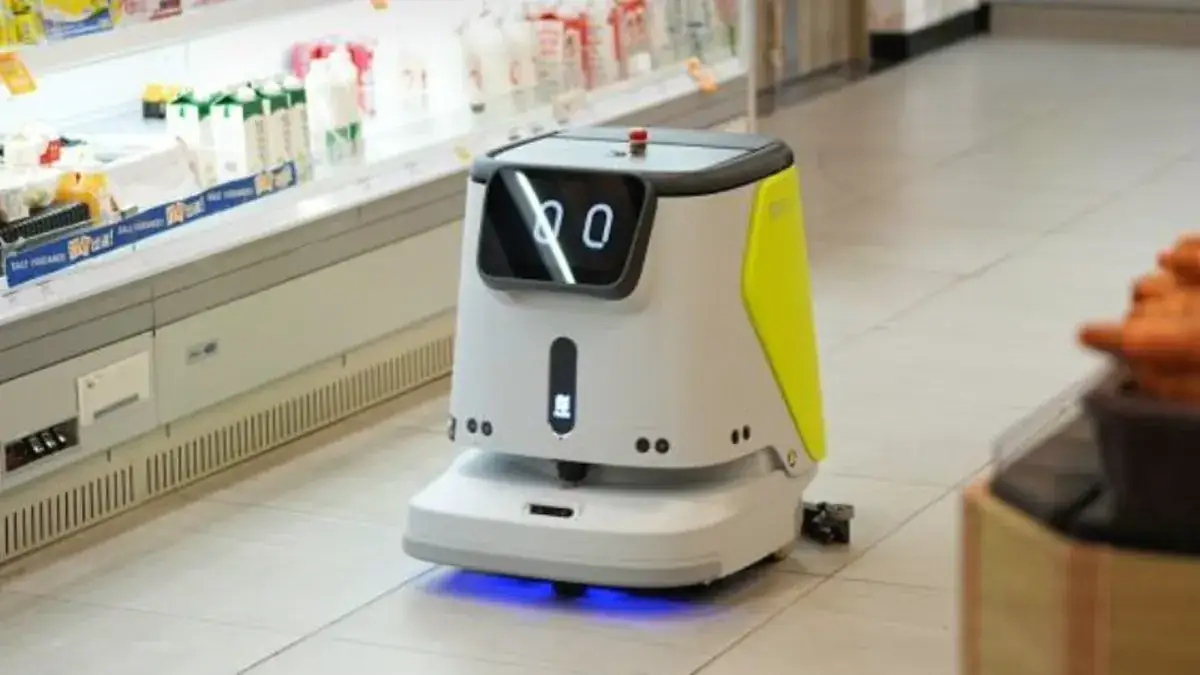
Pudu MT1 Vac
- Sweeping and vacuuming of large surfaces
- Autonomous navigation between racks
- Active dust control
Main benefit: Keeps aisles clean without tying up a cleaning crew.
- Availablephoto 1:1
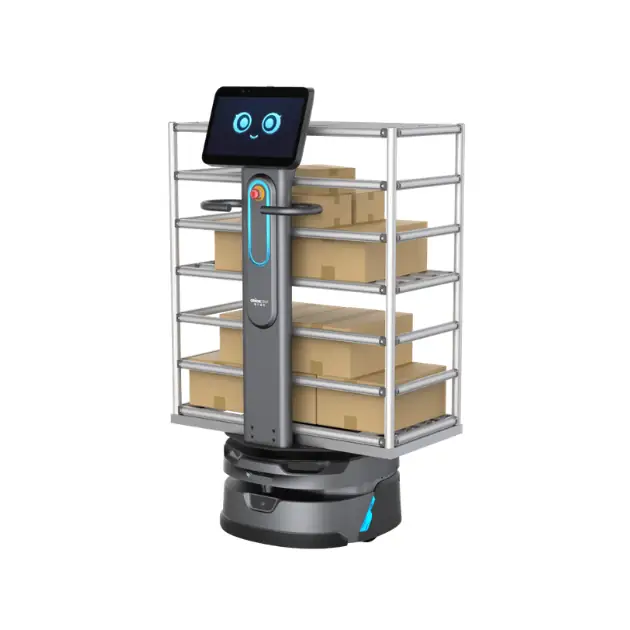
OrionStar · Micro-fulfillment
OrionStar CarryBot
- For warehouses under 2,000 m²
- E-commerce and pharmacy order picking
Main benefit: Brings automation within reach of small logistics spaces.
In practice
Robots in a warehouse
Where robots work, and which ones: each number links to the suitable models.
Automated transport
Link receiving, storage, picking and shipping without manually pushed carts.
See logistics robots
In brief
Service robotics for logistics and warehouses
An AMR (autonomous mobile robot) carries loads around a warehouse or industrial site, navigating with no rails or floor markings. Unlike a conventional AGV, it recalculates its route in real time when it meets an obstacle. Autonomous cleaning robots complement AMRs for aisle upkeep. In this segment, Elio's added value lies mainly in integrating the robots with the WMS and ERP, mapping the sites and monitoring the fleet.
Definitions
- Autonomous mobile robot (AMR)
- A robot that moves on its own by mapping its surroundings, with no rails or floor markings, and steers around obstacles in real time.
- AGV (automated guided vehicle)
- A transport robot that follows a fixed route marked on the floor (tape, magnets) and stops in front of an obstacle instead of steering around it.
- WMS
- Warehouse management software that controls storage locations, inventory and picking tasks.
How it works
How an AMR fits into your logistics flows
An AMR's value depends on its connection to your information system: it is the WMS that assigns its tasks.
Mapping
The site is mapped using SLAM navigation, with no floor works.
IT integration
The WMS or ERP sends transport tasks to the robot fleet.
Execution
Each AMR picks up a task and optimizes its route in real time.
Fleet management
The fleet manager allocates tasks and tracks performance.
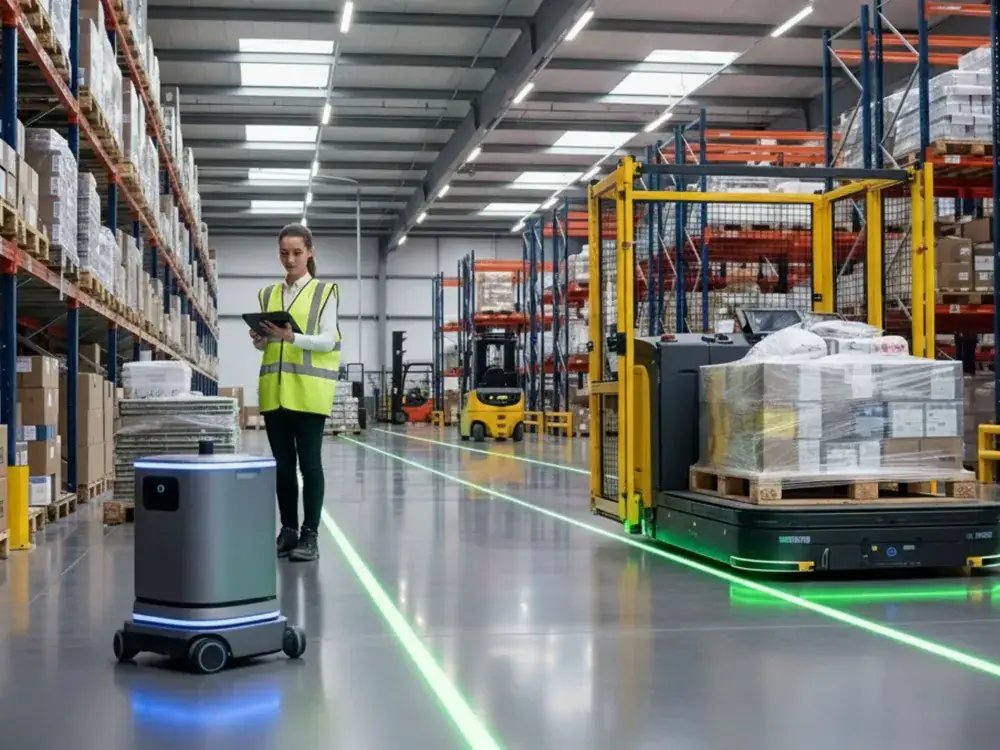
Robot types
The robot families used in logistics and warehouses
Each family addresses a specific task. Many facilities combine two or three of them.
- photo 4:3
- photo 4:3
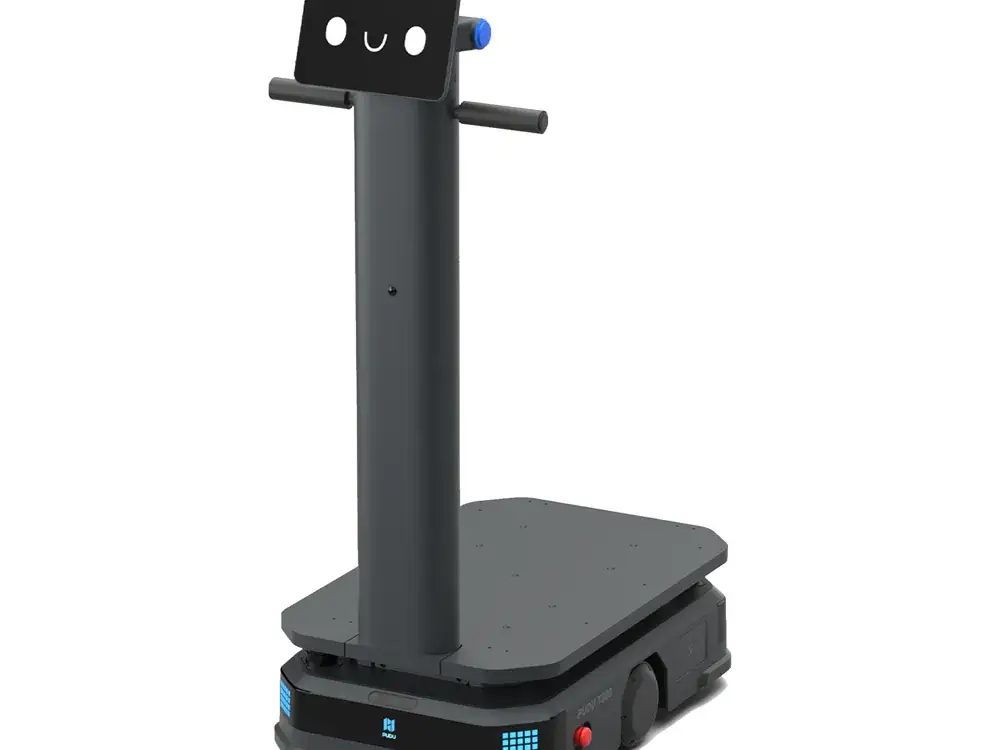
On-site transport robots
Shuttles between production, central kitchen and laundry.
Pudu T300 · HikRobot
See these robots - photo 4:3
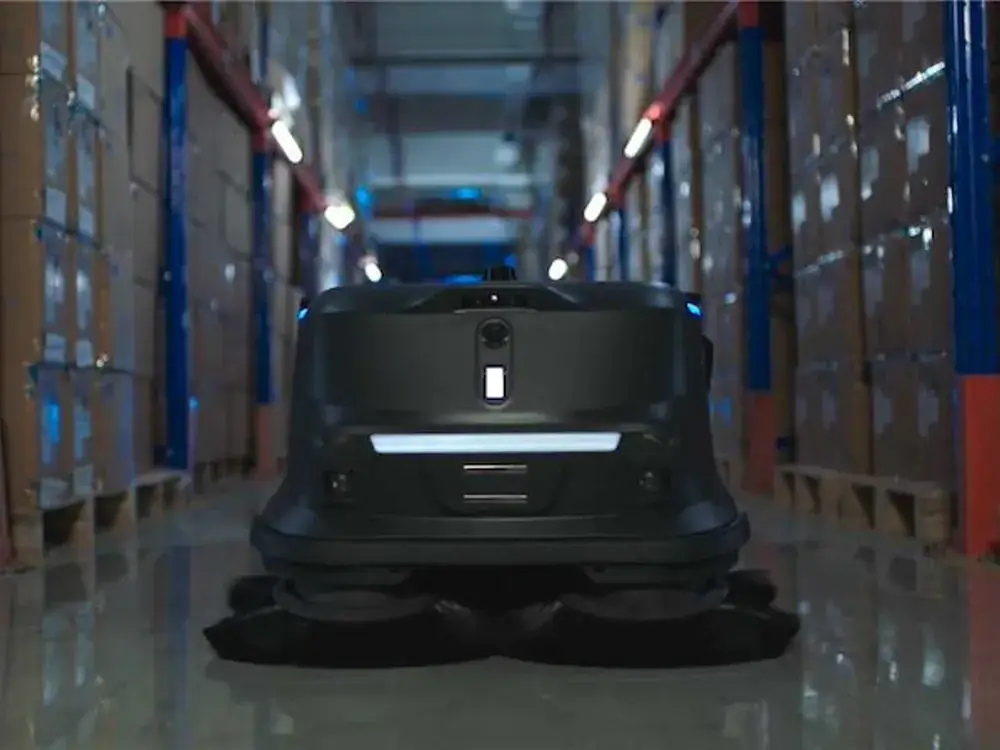
Warehouse cleaning robots
Sweeping and vacuuming aisles and production areas, bulky debris included.
Pudu MT1 Vac
See these robots - photo 4:3
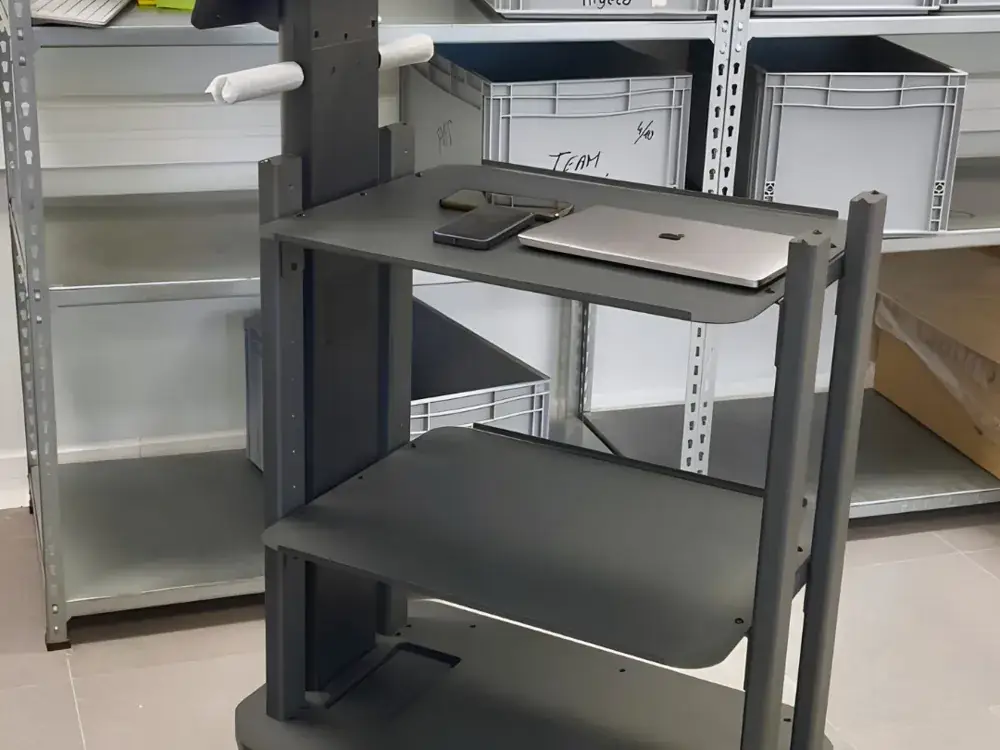
Micro-fulfillment robots
Order picking in warehouses of less than 2,000 m².
OrionStar CarryBot
See these robots
Which robot for your facility?
One week of assessment to shortlist suitable robots, then a free demonstration at your site with test robots.
Use cases
Real situations, measurable results
The receiving-to-storage shuttle
Situation
Forklift operators lose time on empty runs between docks and racks.
With a robot
AMRs make the runs, and operators focus on value-adding tasks.
Warehouse floor upkeep
Situation
Dust and debris build up in the aisles and get in the way of vehicles.
With a robot
The robot sweeps the aisles on a fixed schedule, with no dedicated crew.
E-commerce order picking
Situation
Order peaks overwhelm small warehouses.
With a robot
Micro-fulfillment robots absorb the peaks without expanding the floor space.
ROI and benefits
Key figures for the industry
Every figure is sourced. Estimates are flagged and refined during the assessment with your actual data.
- payload for a warehouse AMR
- 600 kg
- HikRobot manufacturer data
- estimated size of the global AGV/AMR market in 2030, up from $6bn today
- $22bn
- Market data
- carried continuously by an on-site transport robot
- 300 kg
- Pudu manufacturer data
- operation possible for shuttles
- 24/7
- Manufacturer specifications
Our advisory approach
We assess your needs before recommending a robot.
In logistics and warehouses as elsewhere, the right robot depends on your flows, your spaces and your systems. Elio acts as an independent integrator: every recommendation stems from an on-site assessment, not from a catalog.
Discover our full method- 1 week
Assessment and shortlist
Understanding your needs, detailed on-site analysis and a robot shortlist drawn from several manufacturers.
- With you
Robot selection
Joint decision on the robot or robots to retain, and choice between purchase and a 36-month rental with monthly or quarterly fees.
- On site
Free demonstration
Free demonstration at your site, with test robots, in your real-world conditions.
- Ongoing
Maintenance and after-sales
Preventive and corrective maintenance, hardware response within 48 h in France, replacement if needed.
Multi-brand
The best manufacturers, a single point of contact.
Elio partners with the world's leading robot manufacturers. You get access to the whole market's offering, with a single contract, a single after-sales service and a single dashboard.
Independent advice
No brand is imposed: the recommendation starts from your needs, not from stock to clear.
The right robot for each task
A different model can be chosen for transport and for cleaning, on the same site.
No vendor lock-in
You are not tied to a single manufacturer's roadmap or pricing.
Better value for money
Models are compared on the same technical and financial criteria before any choice is made.






Frequently asked questions
Your questions about robots for logistics and warehouses
Another question? Write to us.
An AGV follows a fixed route marked on the floor and stops in front of an obstacle. An AMR (autonomous mobile robot) maps its surroundings, recalculates its route in real time and steers around obstacles, with no infrastructure works.
Yes. Industrial cleaning robots continuously sweep and vacuum aisles and production areas, bulky debris included, with active dust control. They work alongside transport AMRs on the same site.
Yes, that is the core of Elio's support. Our teams connect the fleet to the WMS or ERP so that transport tasks are generated automatically from your real-world flows.
Both are possible: buying the robot, or renting it for a monthly or quarterly fee with a 36-month commitment, including installation, maintenance, insurance and replacement in case of failure. In this segment, Elio's added value lies mainly in IT integration, site mapping, training and fleet monitoring.
Yes. AMRs detect people and vehicles and adjust their speed. Traffic rules and shared areas are defined during the assessment, together with your safety officer.
The number depends on task volume, distances and activity peaks. The assessment models your flows to size the fleet as precisely as possible before any commitment.
Related industries
You may also be interested in
Let's talk about your project for logistics and warehouses.
A 15-minute call with an Elio engineer to qualify your needs. No commitment.