
Elio Robot
FR

Robots by use

Logistics robots and AMRs.

A logistics robot, or AMR (autonomous mobile robot), moves carts, totes or pallets around a warehouse or factory, finding its own way on site. It supplies production lines and links storage areas while teams stay on higher-value tasks.

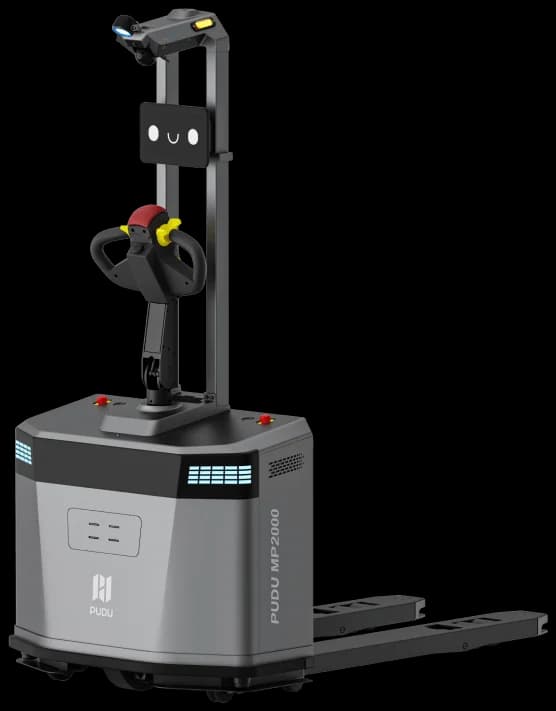
Pudu MP2000 robot
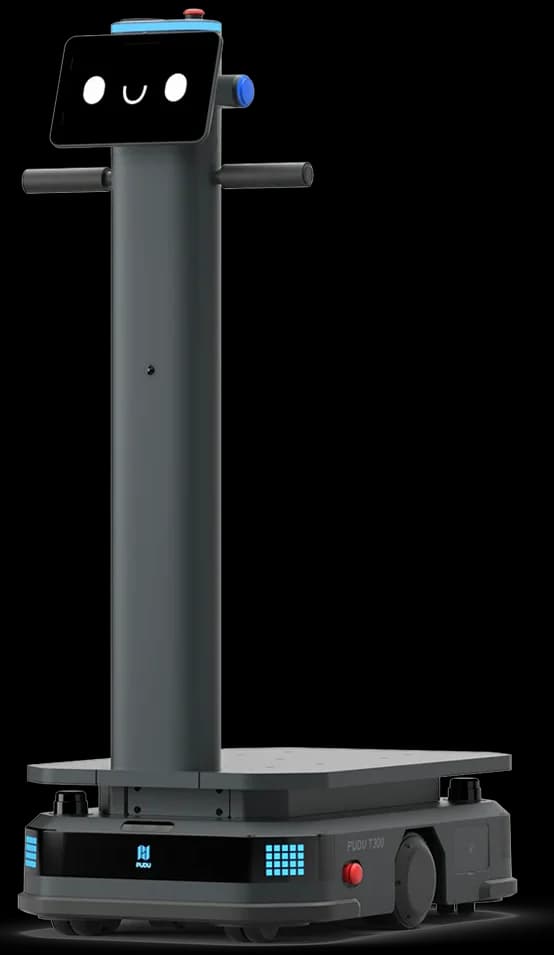
Pudu T300 robot

Our flagship robots

The two models we recommend.

  • Pudu

    Pudu MP2000

    Spot. Lift. Deliver.

    The Pudu MP2000 is an autonomous pallet truck that recognizes pallets with artificial intelligence, including non-standard ones, and moves up to 2,000 kg in warehouses and industrial sites, according to the manufacturer.

    Battery life
    12 h unloaded, 6 h at maximum load
    Charging time
    About 2 h (200–240 V), 3.2 h (100–120 V)
    Payload / capacity
    2,000 kg, lifting height 200 mm
  • Pudu

    Pudu T300

    Load. Roll. Deliver.

    The Pudu T300 is an industrial delivery robot (AMR) that carries up to 300 kg between areas of a factory or warehouse, in automatic mode, following a person or as a push assist.

    Battery life
    12 h unloaded, 8 h fully loaded
    Charging time
    2 h (0 to 90%)
    Payload / capacity
    300 kg; Lifting version with 60 mm lift

How it works

How a logistics robot works

Four top-down scenes: a mission is sent to the robot, a load is placed on it from a shelf, it crosses an aisle slowing down for a person, then drops the load at a workstation and heads back to its station.
  1. 1. MissionWAREHOUSEMission

    Mission

    An operator, a button or your software (WMS) sends a transport request.

  2. 2. LoadingWAREHOUSE

    Loading

    Cart, tote, shelf or pallet depending on the model, with or without human help.

  3. 3. TravelWAREHOUSE

    Travel

    It travels the aisles on its own, shared with the teams: it slows down and stops for obstacles.

  4. 4. DeliveryWAREHOUSEStation

    Delivery

    It drops the load at the next station, then starts another mission or returns to its station.

How to choose

Four criteria that make the difference.

  1. 01

    Payload

    From a few dozen kilos to several tons depending on the model: choose the payload from your actual flows.

  2. 02

    Handling mode

    Shelf, lifting, cart towing or pallet handling: each model fits a type of flow.

  3. 03

    Integration

    Connection to your WMS or tools, fleet management, elevators: it determines the real gain.

  4. 04

    Runtime

    Operation across successive shifts: swappable battery or fast charging, depending on the model.

More models

Other models exist. Compare them.

The comparison tool presents many robots on the same criteria, in the same order. Our two flagship robots are already selected.

Open the comparison tool

Frequently asked questions

The essentials.

Related industries

An autonomous mobile robot: it maps the site and plans its own route, with no rails, and avoids obstacles on its own.

Yes for many models: integration with your IT systems is part of the project Elio runs.

Yes: Elio arranges a free on-site demo with the model suited to your premises.

Both: purchase, or a 36-month rental with installation, maintenance, insurance and replacement included.

Free on-site demo

See it run at your site.

An Elio engineer comes to your site with the robot suited to your business. Purchase or 36-month rental, after-sales service in France.